By Claire Coetzee | Therapeutic Reflexologist, Bodyworker & Wellness Facilitator
Our bodies are constantly communicating with us—and when we slow down and listen, they tell us what they need. For many women, especially those moving through perimenopause, post-menopause, or with a family history of cancer, this awareness becomes even more vital.
While we can’t control everything, we can support our long-term health with practical, grounded lifestyle changes that reduce inflammation, improve detox pathways, regulate hormones, and nourish the gut biome—all of which play a key role in cancer prevention.
This guide is for you if you’re feeling called to reconnect with your body, reduce your cancer risk, or simply cultivate vibrant health through a more integrative approach.
🧬 The 6 Foundations of Cancer Risk Reduction
Here’s where we begin—not with fear, but with curiosity and care.
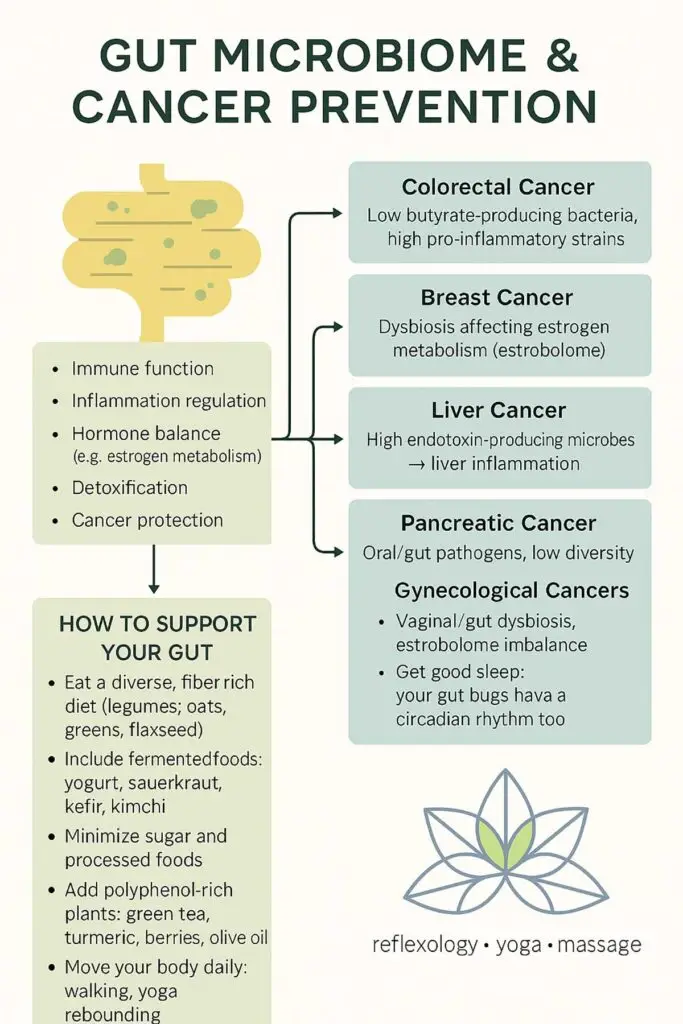
- Gut Health & The Microbiome
Your gut is your second brain. A diverse and balanced microbiome supports hormone metabolism, immune regulation, detoxification, and inflammation control.
Support your gut by:
- Eating fermented foods (sauerkraut, kefir, kimchi)
- Including prebiotics (onions, leeks, asparagus)
- Reducing sugar, alcohol, and ultra-processed foods
- Managing stress through nervous system regulation
- Avoiding unnecessary antibiotics and environmental toxins
- Anti-inflammatory Foods
Chronic inflammation is a driver of many diseases, including cancer. Food can either fuel inflammation or fight it.
Opt for:
- Colourful, seasonal vegetables and low-sugar fruits
- Omega-3-rich foods (flaxseed, walnuts, wild-caught fish)
- Spices like turmeric, ginger, cinnamon, garlic
- Plenty of filtered water
Minimise:
- Seed oils, trans fats, processed meats, refined carbs
- Lymph & Liver Detox Pathways
Your body naturally detoxifies—but it needs support to keep the liver and lymphatic systems flowing.
Try:
- Gentle movement (rebounding, walking, yoga, lymphatic drainage)
- Dry brushing and Epsom salt baths
- Limiting alcohol and processed foods
- Supporting the liver with cruciferous veggies (broccoli, cabbage, kale)
- Hormone Regulation
Oestrogen dominance or dysregulation can increase breast and reproductive cancer risk.
Balance hormones with:
- Daily movement and blood sugar control
- Clean personal care and cleaning products
- Good gut health and liver support
- Seed cycling or herbal support (speak with a qualified herbalist)
- Stress & Nervous System Resilience
Stress affects immunity, inflammation, digestion, and sleep. Chronic stress directly impacts cancer risk.
Regulate your system through:
- Breathwork (box breathing, belly breathing)
- Somatic movement and body-based mindfulness
- Reflexology, massage, and hands-on healing
- Restorative practices and nervous system awareness
- Daily Movement & Body Awareness
Movement isn’t just about exercise—it’s about presence. Movement supports detox, lymphatic flow, stress relief, and immune regulation.
Incorporate:
- 30+ minutes of walking or low-impact cardio
- Yoga or somatic flow to reconnect with your body
- Stretching and mobility to reduce stagnation
- Dancing, swimming, hiking—what brings you joy
🌿 My Approach
As a wellness practitioner, I work with the body through touch, breath, movement, and presence. Each of us has a unique terrain—our own blueprint of health, stress, trauma, and resilience. When we honour this, healing happens.
Whether it’s through therapeutic reflexology, massage, integrative wellness coaching, or restorative yoga—I support my clients in reconnecting with their bodies and creating sustainable lifestyle shifts that empower them, not overwhelm them.
✨ Want Personalised Support?
If you’re navigating hormone changes, feeling overwhelmed, or just wanting a more empowered relationship with your health, I offer one-on-one sessions that blend bodywork and lifestyle guidance to support your next step.
Reach out if you’d like to work together or if you’d like the printable guide to keep on hand.